
How Does a Portable Air Conditioner Work?
In addition to built-in air conditioning units, there are also portable systems available. A potable air conditioner is ideal if you only need to use it temporarily. But how does a portable air conditioner work?
- Zoya Glushtrom
Table of Contents
Monoblock & Split Portable Air Conditioners
There are two types of portable air conditioners: Monoblock or single units, which consist of a single unit with an exhaust hose, and split system units with two components:
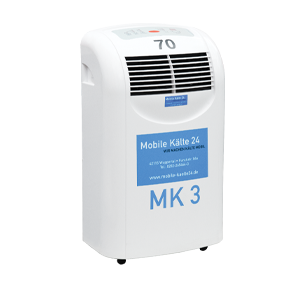
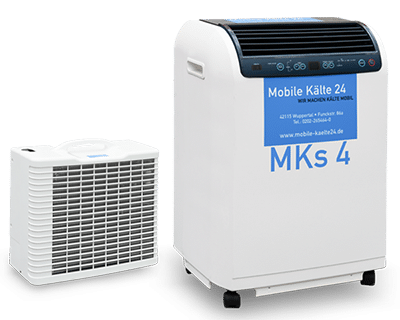
Differences Between Portable Air Conditioners
Monoblock units are composed of a single part. They draw in warm air through one opening and expel cooled air through another. Excess heat is vented out through a hose via window or door gap, enabling an exchange of air.
In contrast, split units do not have this exchange. The indoor unit is placed in the room to be cooled, while the outdoor unit remains outside. The indoor and outdoor units are connected by a refrigerant line. The warm indoor air is drawn in, cooled by the refrigerant, and then vented outside. Let´s take a closer look at how these two types of devices operate.
How Does an Air Conditioner With an Exhaust Hose Work?
A single unit air conditioner cools air by removing heat from the room using a refrigerant. This process involves a component called an evaporator, through which the air is circulated. The refrigerant evaporates, absorbing the heat from the air. The cooler air is then blown back into the room. This principle is similar to how a refrigerator works, except that the cold air is released into the room instead of being contained.
While a Monoblock unit forms a closed cooling circuit, split units generate the cooling cycle using two modules, which we will explain below.
How Does an Air Conditioner Without an Exhaust Hose Work?
The operation of a split air conditioner is more complex than that of a Monoblock unit. A split system air conditioner features two coils – one in the outdoor unit and one in the indoor unit – connected by a refrigerant line. The indoor coil is called the evaporator, while the outdoor coil is known as a condenser. The evaporator must be cooler than the room temperature, and the condenser must be hotter than the room temperature.

1. Compressor Increases Pressure:
The continuously flowing refrigerant in the evaporator absorbs heat from the room and releases it through the line and condenser to the outside. Here´s how it works: A compressor increases the refrigerant´s pressure and heats it up. The hot gas is then directed to the condenser and expelled. A fan at the condenser facilitates this process.
2. Expansion Valve Reduces Pressure:
During heat release, the gas condenses back into a liquid. An expansion valve slows down the refrigerant flow to reduce the pressure, causing part of the refrigerant liquid to evaporate and lowering its temperature. This is how cold refrigerant is produced in an air conditioner. When the surrounding air is passed over the evaporator coil, the room temperature decreases.
Get Expert Advice
Which air conditioner you should choose depends on the desired performance and the specifics of your space. You can view our range of air conditioning units here.
We are happy to advice you on cooling and refrigeration technology.
Contact Form – Cooling Solutions
We will guide you through our quotation form in just a few steps.