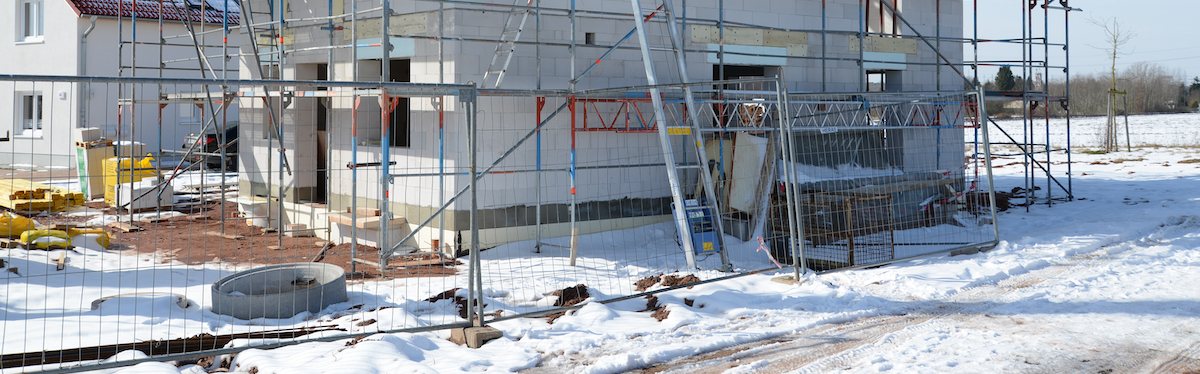
Heating a Winter Construction Site
Here´s why and how heating a winter construction site keeps a project on track.
- Zoya Glushtrom
Table of Contents
Why Should I Heat my Winter Construction Site?
Cold and moisture can have a detrimental effect on construction projects. To mitigate these risks, either the construction company or the property owner must ensure proper heating on the winter construction site. Portable heaters, especially air heaters, are ideal for this purpose. If the construction company doesn´t handle drying management, the property owner will need to rent mobile heating devices.
Failing to take proper precautions during winter construction can lead to mold growth in the new building. Since materials like plaster and screed contain significant amounts of water, applying them increases indoor humidity levels. Moisture that penetrates the building´s structure can also compromise insulation, leading to higher heating costs in the future.
Winter Air Absorbs Less Moisture
In spring and summer, regular ventilation combined with air dryers can effectively reduce moisture. However, during winter, the cold, damp air has a lower capacity to absorb moisture, making ventilation and dehumidification alone insufficient. Therefore, it´s necessary to supplement with heating devices to properly manage a winter construction site.
Prevent Mold Formation in the Attic
If you´re working and heating the lower floors, be sure to insulate the attic or place a heater there as well. Rising warmth can condense on the cold beams of the attic, leading to mold growth, which is particularly common in these spaces.
What Types of Winter Construction Heating Systems Are There?
Heating a new building without an installed heating system during the winter can be done by using air heaters. By professionally deploying construction heaters, you can avoid weather-related work stoppages and reduce the risk of damage from excessive moisture.
The following heating systems are available for winter construction:
1. Direct Air Heating Systems

Direct air heaters, also known as oil-fired heat blowers or “oil heat cannons”, can be placed inside or outside the construction site. Fans blow heated air through flexible hoses into the building. Exhaust gases can be vented outside to prevent indoor air pollution.
2. Indirect Water Heating Systems

In indirect air heating, a mobile heating unit is installed outside the building, or the existing site heating system is utilized. Hot water is pumped through hose lines to the heating units inside the building.

Another example of an indirect, water-based system is the air handler. It absorbs the heat generated by an external unit and distributes it throughout the building via a powerful air flow. The air handler thus serves as a link between heat generation (heating system) and heat distribution (air).
3. Electric Heaters

If the construction site has access to electricity, electric heaters can be used directly inside the building. These heaters are straightforward to install and operate without producing exhaust gases.
How Should I Heat and Ventilate my New Construction during Winter?
Depending on whether the construction site has a heating system or electricity, you can choose between direct, indirect, or electric-based heating systems for winter construction.
Maintain Temperature Guidelines
For optimal construction results, it´s crucial to maintain the temperature ranges specified for the building materials. For example, different screed mixtures have specific heating protocols that must be followed to avoid drying damage such as cracking. It´s recommended to hire an expert rather than attempting to manage the construction heating or screed drying by yourself.
Don’t Forget Ventilation
Before moving into a new building in winter, it should be continuously heated for two to four weeks. Additionally, perform shock and cross ventilation three to four times daily. To speed up the drying process, you can also use drying devices.
For additional moisture control during construction, consider using dehumidifiers. Our equipment can help you manage construction moisture, residual dampness, wet walls, and prevent water damage after flooding.
Contact Form – Heating Solutions
We will guide you through our quotation form in just a few steps