
Expanding the Heating Network
This article was created in 2024 and updated in February 2026.
As a part of the heat transition, Germany aims to expand its heating network. We assist in the implementation.
- Zoya Glushtrom
Table of Contents
German Government Advances the Heat Transition
The German government is advancing the heat transition, including the expansion of heating networks, which, together with modern heating systems, offer an environmentally friendly alternative to gas and oil heating. The major advantage of heating networks is their ability to provide widespread heating without needing individual heating solutions for each property.
Municipal Heat Planning
The expansion of such networks is a significant part of municipal heat planning. Whether such planning exists influences the type of heating systems consumers can install. For example, if there is neither a heating network nor municipal heat planning, citizens have more freedom in choosing their heating system. To effectively advance the heat transition, availability and expansion are crucial. According to the Heat Planning Act, large cities have until mid-2026 for planning, while smaller municipalities have until 2028.
Heating Network Subsidy
District heating and local heating enable the integration of renewable energy sources and waste heat, playing a crucial role in the heat transition. However, connecting a property to a heating network and expanding the network itself involve high costs. To make this type of heating attractive for property owners and potential network operators, the state provides subsidies.
State Subsidies for Property Owners
Property owners wishing to connect their property to the heating network can benefit from state subsidies under the revised Building Energy Act (commonly known as Heating Act, or “Heizungsgesetz” in German).
Federal Funding for Efficient Heating Networks Supports Renewable Energies
Companies, municipalities, associations, and cooperatives can also benefit from subsidies. For example, the Federal Funding for Efficient Heating Networks (BEW) program supports, among other things, transformation plans for the conversion of existing heating networks and the construction of new heating networks that are powered by at least 75 percent renewable energy and/or waste heat, and awards a grant. Further information is available in our blog post Overview of Federal Funding for Efficient Heating Networks.
How Does a Heating Network Work?
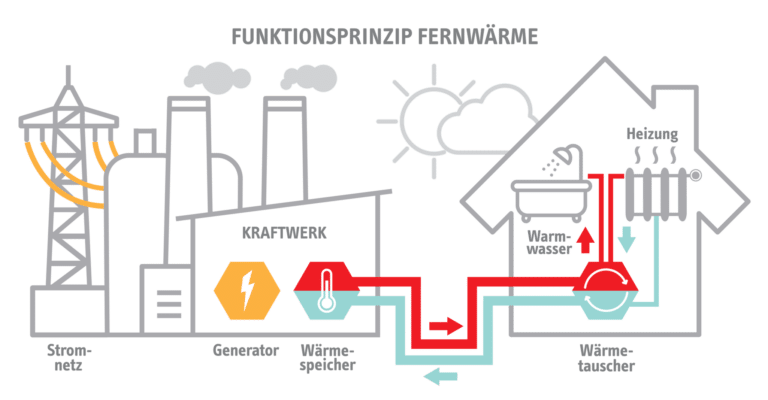
In a heating network, a central heating plant supplies the connected area with heat via pipelines. The energy sources are diverse: from fossil fuels to waste heat from industrial plants to renewable energy sources or geothermal energy.
Who Operates a Heating Network?
Often, municipalities or municipal utilities operate heating networks. This makes sense, as an expanded network is often a prestige project for the community, offering locational and financial advantages. A communal use (energy production community or energy cooperative) is also possible. Additionally, municipalities can contract with private providers.
Challenges in Expanding the Heating Network
For users, connecting to a heating network involves little effort. The old boiler simply needs to be replaced with a heat exchanger.
However, the expansion of the heating network itself is primarily associated with systemic challenges. These include:
1. Planning and Approval
Obtaining construction and environmental permits can be time-consuming.
2. Coordination with Other Infrastructures:
Supply networks usually run along public roads, requiring close coordination with other infrastructures like roads, water, electricity, telephone, and internet.
3. Technical Complexity
This increases with the integration of various heat sources and energy carriers, especially with renewable energies.
4. Costs and Financing
Despite available subsidies, financing can be challenging. Long-term profitability must also be ensured.
Challenges also arise from commissioning and operating the network:
5. Commissioning and Operational Challenges
- Temporary heating outages during the transition
The commissioning housing association or owner must plan the connection to the heating network carefully. During the transition, temporary heating outages occur as the old heating system is decommissioned and the new transfer station is installed. This requires careful planning to minimize disruptions to consumers. - Outages due to modifications, repairs, or expansions
Network operators face significant effort in planning and expanding. The main pipeline branches out to supply all buildings in the area with heat. Temporary power or heating outages are usually unavoidable during modifications, repairs, or expansions. Unexpected outages can also occur, for example, due to pipeline damage. - Problems at the power plant
Issues can arise not only with the pipelines but also with the energy source itself. Power plant operators or biogas plant operators may face unexpected outages that need quick resolution.
Expanding the heating network requires solutions to bridge various predictable or unpredictable outages. This is where we come in.
Expanding the Heating Network – We Have Your Back
Those without heating due to technical issues with the heating network or a transition should not have to endure long periods of cold. To ensure residents of affected properties are not without heating for long, we supply housing associations, network operators like municipalities or utilities, and power plant or biogas plant operators with mobile heating systems. Operators of waste incineration plants or other industrial facilities generating waste heat for district heating can also be affected.
Our Services
To ensure uninterrupted supply of local and district heating, we offer support for:
- Heating network operators during unexpected damages like pipeline breaks
- Heating network operators during planned repairs, maintenance, and network expansions
- Housing associations and owners connection to a heating network
- Power plant operators during unexpected issues at the plant
- Biogas plant operators during unexpected issues at the plant
- Waste heat-generating production sites during operational problems
Our mobile heaters are flexible and can be connected directly to the power plant, city area, or affected property. We quickly deliver a mobile heater with the required heating capacity, professionally connect it, and put it into operation. This allows us to inject the necessary heat into the network. Our unique full-service ensures a smooth emergency heating operation and, if needed, also provides fuel and electricity supply.
Cooperation with Bielefeld Public Utilities
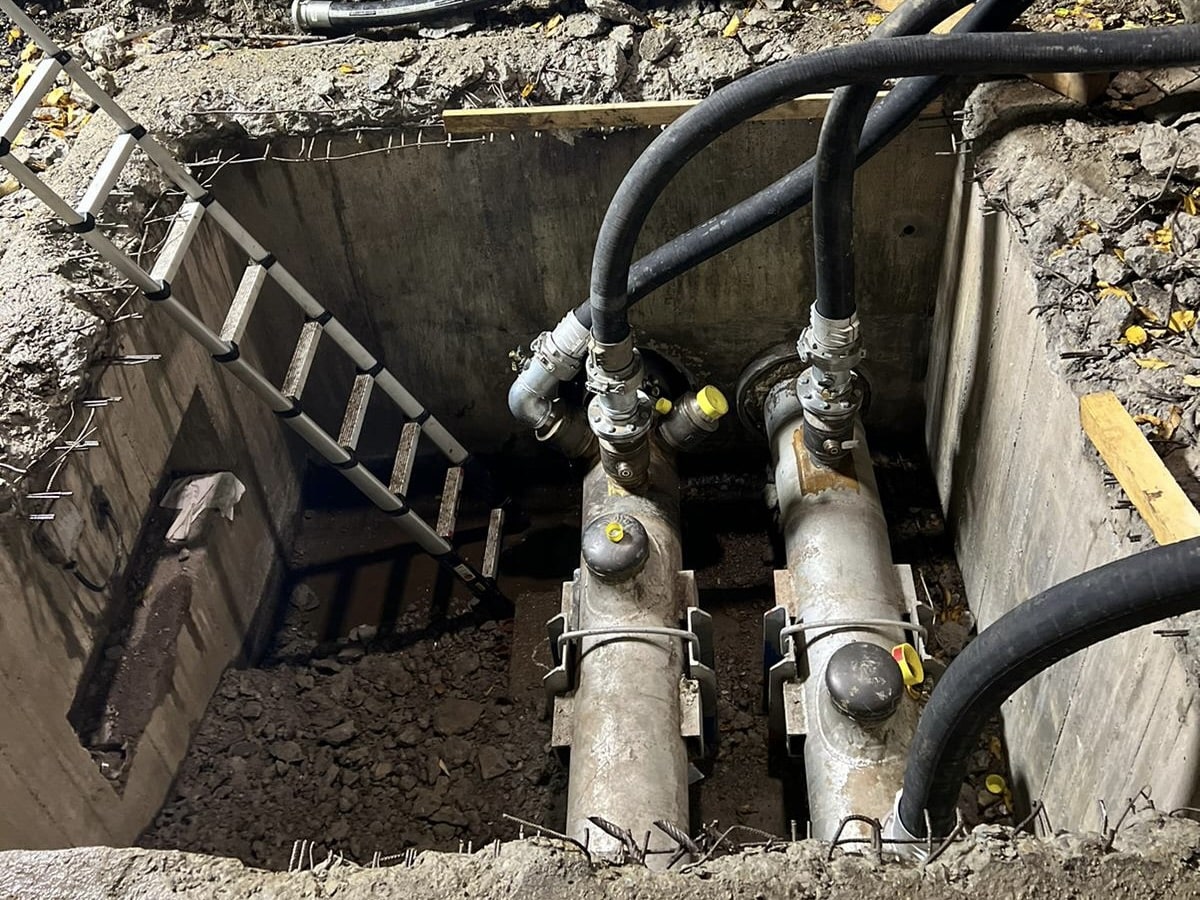
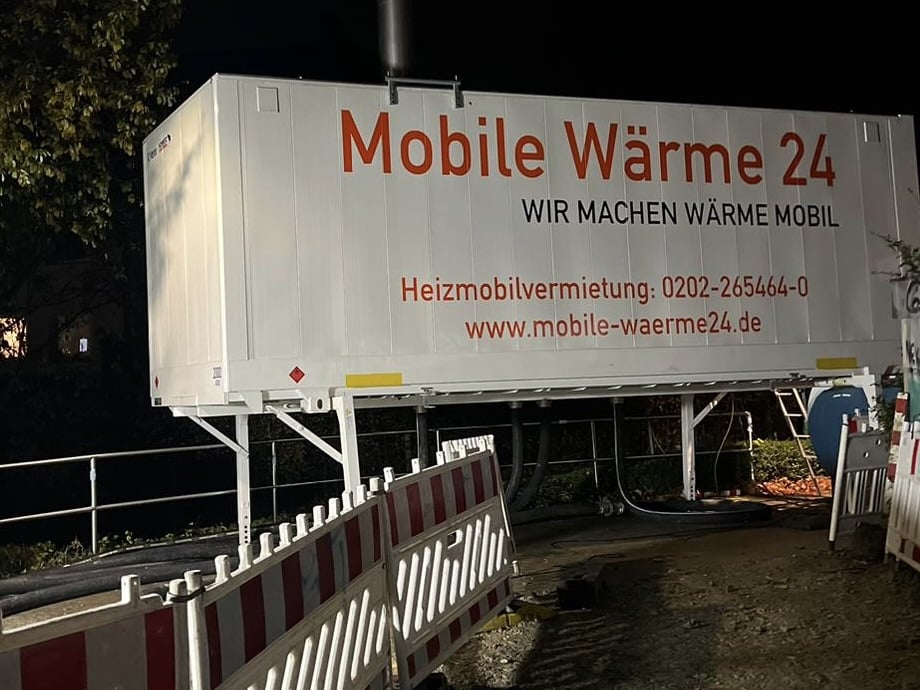
Recently, we supported the Bielefeld public utilities during an unexpected district heating outage. The quick response of the utilities and the efficient cooperation with Mobile Wärme 24 ensured that affected customers were largely supplied with heat during the repair work on the district heating pipeline.
Read full report here.
Summary & Conclusion
In Germany, the government promotes the expansion of heating networks as an environmentally friendly alternative to conventional heating methods. State subsidies, as specified in the revised Building Energy Act (Heating Act), support property connections. The system operates on a central heating plant distributing heat through pipelines, adjusted by an internal heat exchanger in the building. Operators are typically municipalities or municipal utilities.
However, expansion faces challenges such as commissioning and operational disruptions. Mobile heating systems offer solutions during technical issues, supporting operators during expansion. Overcoming these challenges requires effective cooperation.
Planning a connection to a heating network, expanding a network, or dealing with a system outage? Contact us!
Disclaimer: The granting of fundings is subject to the availability of budgetary resources. The contents of this page have been compiled with the utmost care. However, we cannot guarantee the accuracy, completeness, or timeliness of the contents. Our website contains links to external websites of third parties over whose content we have no influence. Therefore, we cannot accept any liability for this external content.
Sources:
Bafa.de (last seen on 02/04/26)
Rent Heating Container
We will guide you through our quotation form in just a few steps