
Mobile heating systems are flexible and temporary heat generators that are used in a variety of situations where a fixed heating installation is not available, has failed, or is insufficient.
They offer a fast and efficient solution for heating needs in a wide range of sectors. In contrast to permanently installed heating systems, they are characterized by their mobility and adaptability. They can be quickly transported to different locations and put into operation, making them an ideal solution for emergencies, temporary projects, or seasonal requirements.
Inhaltsverzeichnis
Mobile Heating Technology: Crucial for Many Sectors
The importance of mobile heating technology extends across a multitude of sectors and applications. It is crucial for maintaining business operations, ensuring comfort, and managing emergency situations.

In the construction industry, mobile heating systems enable work to continue even at low temperatures by heating construction sites and drying materials. At events and in temporary structures, such a marquees or temporary accommodation, they ensure a pleasant environment for visitors and residents. In the event of heating failures in residential or commercial buildings, they serve as a quick emergency solution to maintain the heat supply and prevent major damage or inconvenience. They are also used in industry, for example for process heat supply or for heating warehouses.
The flexibility and rapid availability of these systems make them an indispensable tool in many areas.
What Is a Mobile Heating System?
A mobile heating system is a portable heat generator that serves to temporarily or flexibly provide heat, hot water, or warm air. In contrast to permanently installed heating systems, mobile heating systems are designed to be quickly transported to various locations and put into operation there. They are often designed in containers, on trailers, or as compact, portable devices. Their main purpose is to provide a fast and reliable heating solution in situations where the regular heating system fails, is not available, or additional capacities are needed. This can range from heating individual rooms to supplying entire building complexes or temporary infrastructures. The energy supply can be provided by various fuels such as oil, gas, or electricity, which further increases the versatility of these systems.
How does a Mobile Heating System Work?
The functioning of mobile heating systems varies depending on the type and fuel, but the basic principle remains the same: they generate heat and release it into the environment or direct it via a system to the areas to be heated. Many mobile heating systems work similarly to stationary boilers by burning a fuel (e.g., heating oil, gas) to heat water, which is then pumped through heating circuits. Other systems, especially smaller, electrical devices, generate heat directly through electrical resistors or infrared radiation. Heat can be released directly into the air (air heaters) or indirectly via heat exchangers connected to existing heating systems. Mobility is ensured by the compact design, often in the form of trailers or containers, and the possibility of quick connection to external energy sources and heating circuits.
Heating Trailers
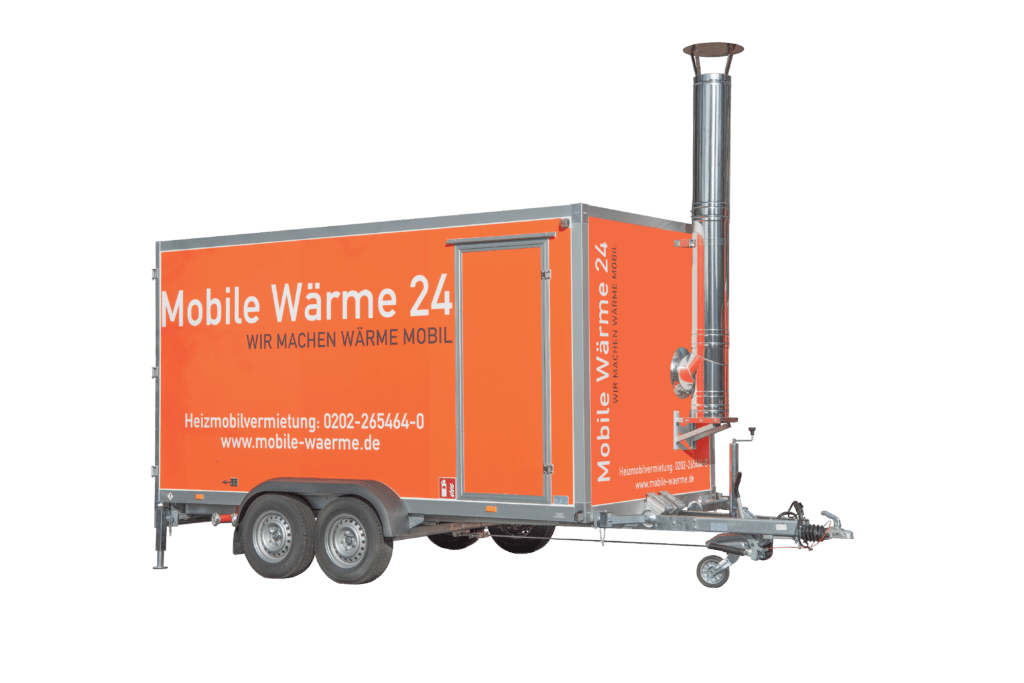
Heating trailers are mobile heating centers mounted on a trailer, making them easy to transport. They are usually equipped with a complete heating system, including a burner, a heat exchanger, pumps, and control elements. They are often used for larger temporary heating requirements, such as on construction sites, at large events, or as emergency heating for entire buildings. Their output ranges from smaller units to very powerful systems. The advantage lies in their high mobility and rapid readiness for use, as they only need to be connected to existing heating circuits and an energy source.
Heating Containers
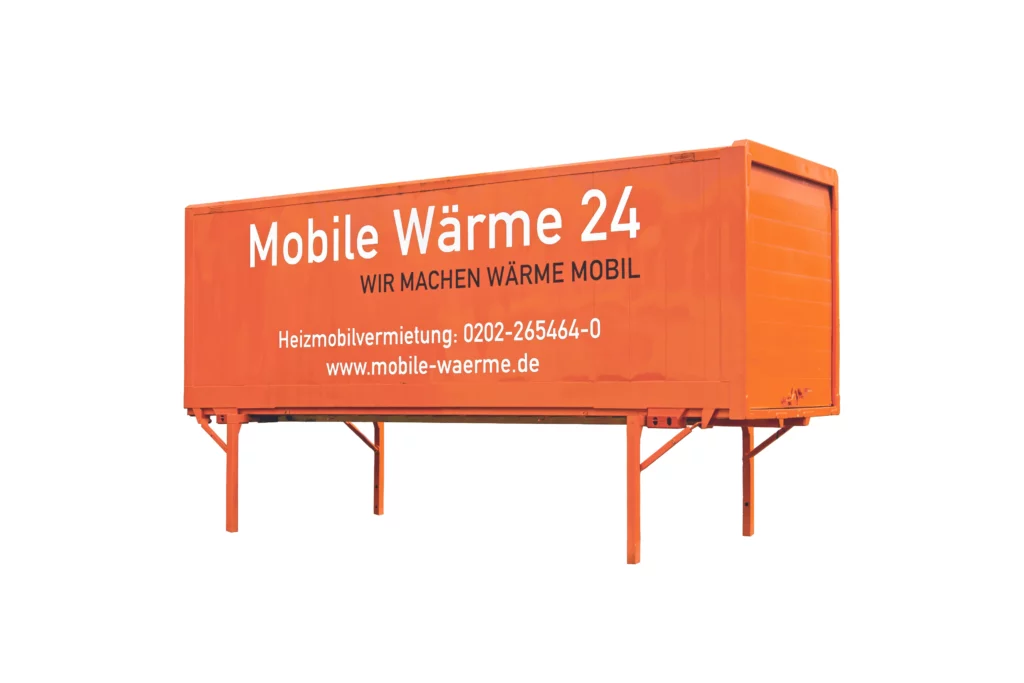
Heating containers are, as the name suggests, mobile heating systems housed in standardized containers. This allows for easy transport by truck or ship while providing protection from weather influences and vandalism. Heating containers are often designed for higher capacities than heating trailers and are typically used for longer-term temporary projects or as a replacement for failed heating systems in larger building complexes, industrial plants, or district heating networks. They can be operated autonomously and often include fuel tanks and other technical equipment to ensure independent operation.
Construction Dryers
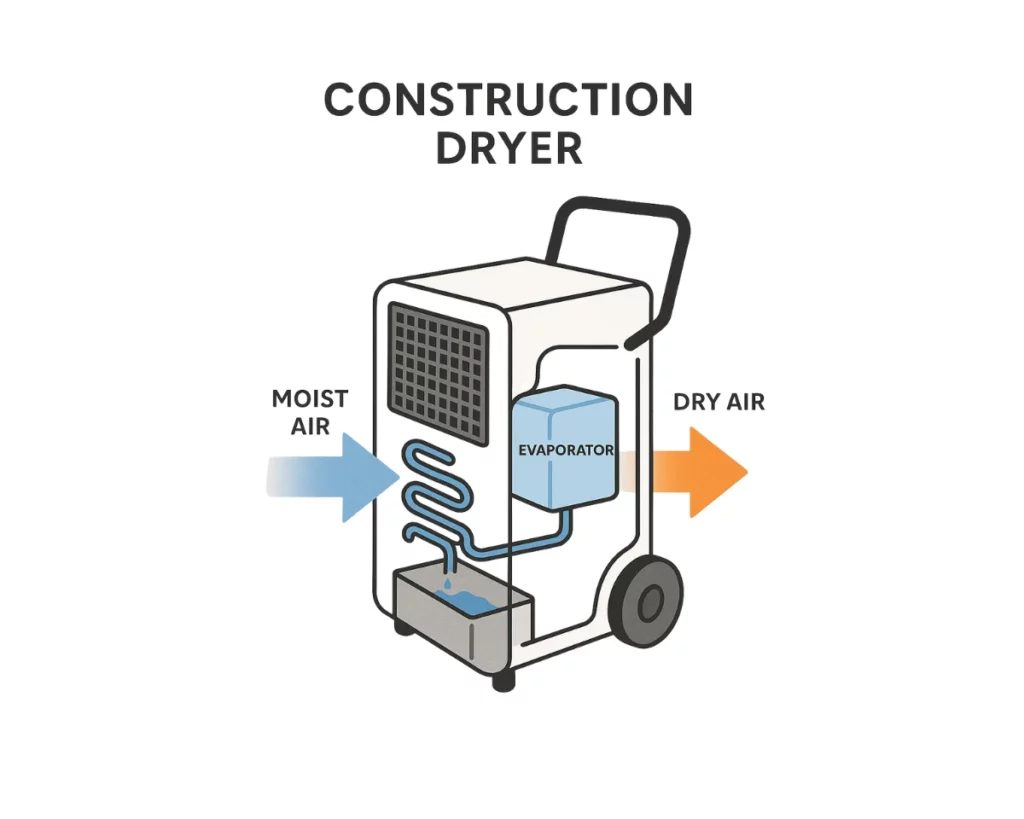
Construction Dryers are specialized mobile devices used to remove moisture from the air and building materials. Although their primary purpose is dehumidification, many models also contribute to heating the room by emitting heat, which accelerates the drying process. They are indispensable on construction sites to make new buildings ready for occupancy faster, to save the building structure after water damage, or to prevent mold growth in damp basements. The functionality is often based on the condensation principle, where moist air is passed over cold surfaces, where the moisture condenses and is collected. The warmed and dehumidified air is then released back into the room.
Direct Air Heaters
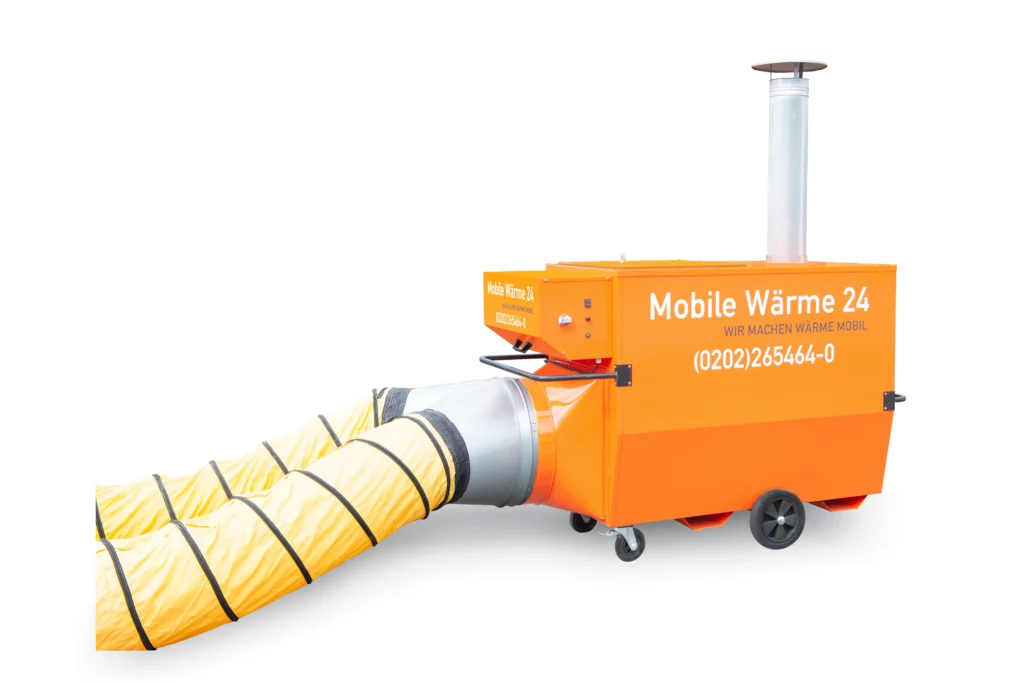
Direct air heaters are mobile heating devices that directly transfer combustion heat to the air to be heated. This means that the combustion gases are mixed with the heated air and blown into the room. They are very efficient, as there is hardly any heat loss, and are ideal for quickly heating large, well-ventilated rooms such as construction halls, tents, or workshops. Oil or gas are often used as fuels. Due to the direct release of combustion products into the room, sufficient ventilation is absolutely necessary to avoid the accumulation of harmful gases.
Electric Fan Heaters
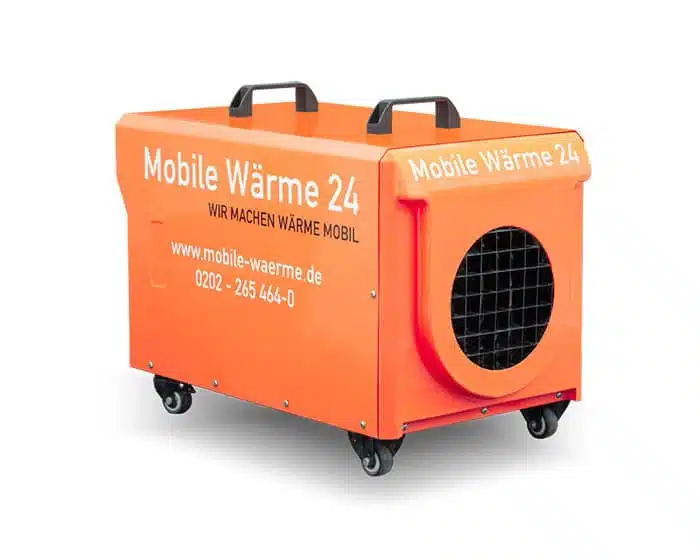
Electric Fan Heaters are compact, portable heating devices that convert electrical energy into heat and distribute it through the room using a fan. They are particularly flexible to use as they only require a power outlet. Their advantage lies in the quick availability of heat, easy installation, and the ability to use them specifically in individual rooms. They are often used as supplementary heating, in small offices, garages, or for short-term heating needs. Although they are usually inexpensive to purchase, operating costs can be higher than with other heating systems for longer use due to electricity consumption.
Electric Heating Carts
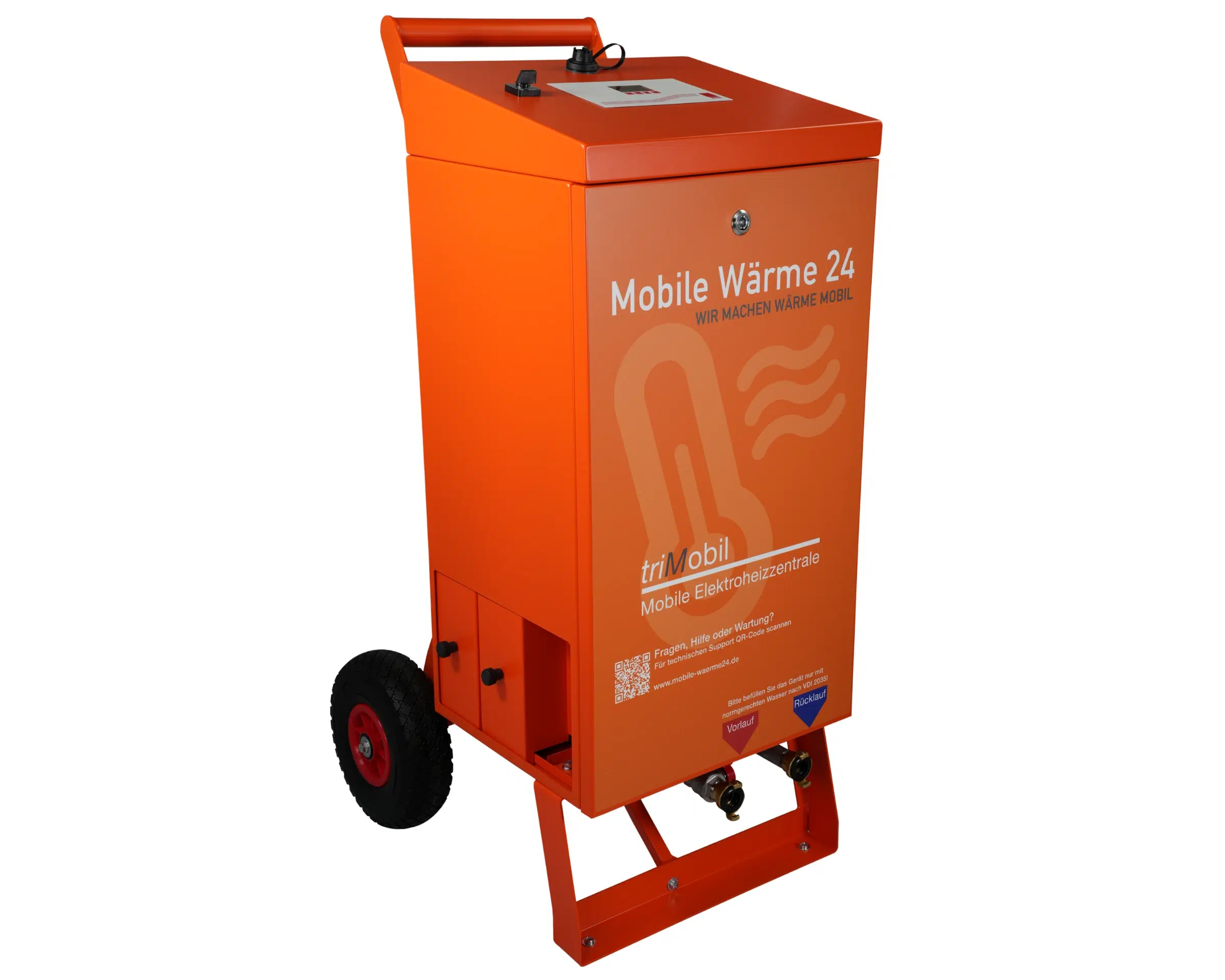
An electric heating cart is a mobile heating unit mounted on a hand truck or a similar wheeled base. The design allows for easy transport within buildings or on construction sites where larger heating trailers or containers would be impractical. They can be connected to existing infrastructures such as underfloor heating systems and thus be used, among other things, for screed heating.
Mobile Pellet Heating Systems
Mobile Pellet Heating Systems use wood pellets as fuel and offer an environmentally friendly alternative to fossil fuels. These systems are often housed in containers or in trailers and include a pellet bunker, a screw conveyor, a burner, and a heat exchanger. They are particularly suitable for temporary use in areas where sustainable and CO2-neutral heat generation is desired, for example, at events, in ecologically sensitive construction projects, or as a transitional solution for buildings being converted to renewable energies. The functionality is similar to oil or gas heating systems, with pellets automatically fed to the burner and the generated heat released via a water circuit.
Mobile Heat Pumps
Mobile Heat Pumps represent an innovative solution for temporary heating and cooling. They utilize environmental energy (from air, water, or ground) to generate or dissipate heat. These systems are typically built into compact units or containers and can be flexibly deployed in various locations. Mobile heat pumps are particularly suitable for applications where both heating and cooling are required, or in situations where access to fossil fuels is restricted. They are an energy-efficient option that reduces CO2 emissions and thus contributes to a more sustainable heat supply.
Where are Mobile Heating Devices Used?
Mobile heating devices are indispensable in a variety of scenarios due to their flexibility and rapid readiness for use. Their main areas of application include:
- Construction Sites: Here they serve to heat shell construction, dry screeds, or ensure frost-free working conditions, especially in the colder months. They make it possible to continue construction projects even in unfavorable weather conditions.
- Events and Temporary Structures: Whether marquees, temporary exhibition spaces, open-air events, or emergency shelters – mobile heating systems ensure a pleasant temperature and comfort for visitors, residents, and staff.
- Emergencies and Heating Failures: In the event of a failure of the stationary heating system in residential or commercial buildings, schools, or hospitals, mobile heating centers can quickly provide a temporary solution and maintain the heat supply until repairs are completed.
- Industry and Commerce: In warehouses, production facilities, or workshops that do not have a fixed heating system or where additional heat is required for certain processes, mobile heating devices are used. This can also include heating process water or tempering materials.
- Renovation and Water Damage Drying: After water damage, construction dryers and mobile heating systems are essential to quickly dry the affected areas and thus prevent mold growth and further damage to the building structure.
- Agriculture: In agriculture, mobile heating systems can be used to heat greenhouses or animal stables to ensure optimal growth or keeping conditions.
- Hot Water Supply: With the help of mobile heating systems, hot water supply can be ensured, depending on the circumstances, with or without the addition of a hot water generator.
The versatility and the ability to provide heat exactly where it is needed make mobile heating devices a valuable resource in many industries and situations.
What Is the Difference to Stationary Heating Systems?
The main difference between mobile and stationary heating systems lies in their flexibility, installation, primary purpose, and efficiency.
| Stationary Heating System | Mobile Heating System | |
| Flexibiltiy | Permanently installed in a building and permanently connected to the heating system and energy supply | Designed for temporary or flexible use; transportable; can be quickly deployed in various locations as needed |
| Installation | Often requires structural measures and fixed piping | Generally simpler and requires less construction effort; can be operated autonomously, often with integrated fuel tanks, or connected to external energy sources |
| Application | Designed for long-term operation at a fixed location; usually the center of a building´s heat supply; Examples include gas or oil boilers, heat pumps, or district heating connection | Situations where a fixed heating system is not available, has failed, or an additional heat source is required |
| Efficiency | Designed for efficiency and longevity in continuous operation | Operating costs per kilowatt-hour may by higher, but this is compensated by versatility and the avoidance of downtime |
Advantages & Disadvantages of Mobile Heating Systems
The advantages and disadvantages of mobile heating systems include:
Disadvantages:
- Operating Costs: Especially for smaller, electric mobile heating devices, the energy costs in continuous operation can be higher than for efficient, permanently installed systems.
- Logistical Effort: The transport and installation of larger mobile heating systems (e.g., heating containers or trailers) require logistical effort and, if necessary, special permits.
- Space Requirement: Mobile heating systems, especially the larger units, require floor space, which can be a challenge in densely populated areas or on confined construction sites.
- Emission and Noise: Depending on the fuel and type, mobile heating systems can cause emissions and generate a certain noise level, which must be taken into account in sensitive environments.
- Maintenance and Refueling: Mobile systems operated with fossil fuels require regular maintenance and ensuring the fuel supply.
Advantages:
- Flexibility and Mobility: The biggest advantage of mobile heating systems is their transportability. They can be quickly brought to any location where heat is needed, be it a construction site, an event, or a building with a heating failure.
- Rapid Readiness for Use: Mobile Heating systems are usually quickly installed and put into operation. This is particularly critical in emergencies or when there is a short-term need for heat.
- Bridging Failures: They serve as an ideal temporary solution for repairs or the replacement of stationary heating systems to minimize operational interruptions.
- Seasonal Use: For seasonal requirements, such as heating marquees in winter or temporary warehouses, they offer a cost-effective alternative to permanent installation.
- Scalability: Depending on the requirements, several mobile units can be combined to achieve greater heating capacities.
- Independence: Many mobile heating systems can be operated autonomously, often with integrated fuel tanks, which makes them independent of the local infrastructure.
The decision for or against a mobile heating system strongly depends on the specific requirements of the deployment location, the duration of the need, and the available resources.
What Is a Mobile Heating System? – Conclusion and Outlook
Mobile heating systems are far more than just temporary emergency solutions; they are flexible, powerful, and versatile tools for heat supply in the most diverse contexts. From quickly bridging a heating failure to heating construction sites and supporting large events – their ability to provide heat as needed and independently of location makes them an indispensable component of modern infrastructure and emergency planning.
The technological development in the field of mobile heating technology is constantly progressing. In the future, the mobile heating area will likely develop even more efficient, environmentally friendly, and smarter mobile heating solutions. Innovations in the areas of renewable energies, improved fuel efficiency, and digital control systems will further expand the application possibilities and simplify integration into existing systems. Mobile heaters have established themselves as a temporary solution, particularly in the current heat transition, when heaters are being replaced or households are being connected to the heating network. This aspect will continue to be highly relevant in the future.
Interested in a mobile heating solution? Order your preferred mobile heater below.