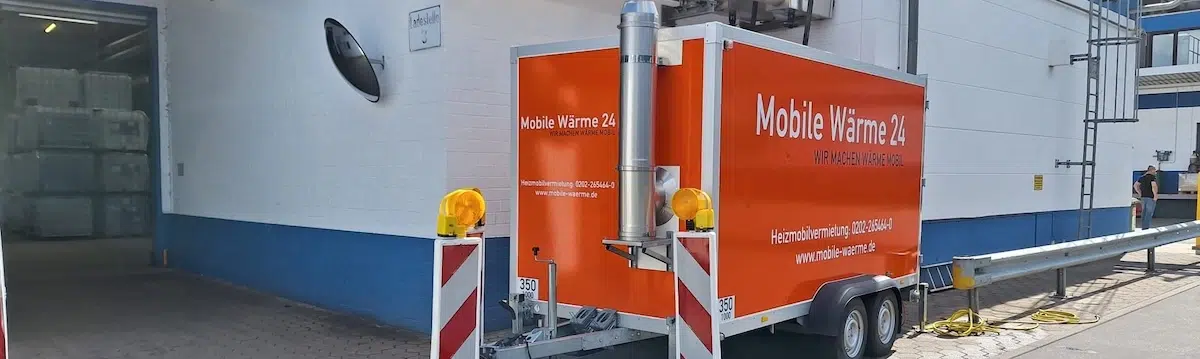
A temporary heating system was crucial for a manufacturer of mineral oil products to maintain operations during the refurbishment of its thermal oil piping system. Thanks to Mobile Wärme 24´s full-service approach, technicians connected the mobile heating trailer to the existing system and successfully commissioned it.
Thermal Oil Piping Systems – Technical Background
Thermal oil systems – also known as heat transfer oil systems – are industrial heating solutions used for indirect temperature control in production processes. Thermal oil acts as a heat carrier and allows for significantly higher temperatures than steam, with operating ranges between 300 and 400 °C.
High Safety & Low Maintenance
Thermal oil systems operate in a closed-loop cycle. The oil is heated and circulated to the points of use. A key advantage is the very low vapor pressure of the oil, eliminating the need for high-pressure systems. This increases operational safety and reduces maintenance compared to steam systems, as there is no corrosion or risk of freezing.
Wide Range of Applications
Thermal oil heating systems are used across many industries, including the chemical and petrochemical sectors, the printing an paper industry, the wood and furniture industry, as well as the plastics and textile industries.
What Happens During a Thermal Oil Piping Refurbishment?
Refurbishing thermal oil piping in an industrial facility is a complex task that requires careful planning and execution to ensure both safety and system efficiency. Refurbishment becomes necessary when existing piping shows signs of wear, corrosion, leaks, or deposit that impair heat transfer or pose safety risks. It may also be required during planned upgrades or capacity expansions.
Typical refurbishment steps inculde:
- Shutdown and drainage
- Cleaning
- Inspection and disassemply
- Installation and new piping
- Pressure and leak testing
- Refilling and deaeration
- Commissioning and optimization
During this process, maintaining heat supply to other parts of production is often essential. This is where Mobile Wärme 24´s mobile heating solutions come into play – bridging the gap when the main heating system is down, ensuring production continues without disruption. Their full-service package, including system connection and commissioning, eases the burden on operators and supports quick and efficient thermal recovery.
Advantages of Mobile Heating During Refurbishment Projects
Mobile heating solutions are particularly vital when existing heating systems must be shut down or replaced. Key advantages include:
- Continuous operation: Critical processes requiring consistent heat can continue during maintenance or refurbishment.
- Rapid, flexible availability: Systems are available in various output ranges and can be deployed quickly.
- Adaptability: Compatible with different heating infrastructures.
- Cost savings: Downtime is avoided, and work can proceed even in colder months.
- Safety: Modern mobile heating units come with essential safety features and are installed by professionals.
In the case above, a 350 kW heating trailer was used to bridge the refurbishment phase. Thanks to the full-service approach, workload was minimized for the customer and the refurbishment could proceed smoothly.
Full-Service Benefits from Mobile Wärme 24
The full-service model provided by Mobile Wärme 24, as applied in this thermal oil piping refurbishment, offers significant advantages. Customers are relieved from dealing with the complexities of setup and operation of temporary heating systems. Mobile Wärme 24 handles delivery, safe connection to existing infrastructure, and commissioning by qualified staff.
This all-inclusive service ensures:
- Smooth integration of temporary systems
- Minimal internal ressource demand
- Compliance with safety and technical standards
allowing customers to focus on their core operations without interruption.