
Table of Contents
Since 2024, the new F-Gas Regulation (2024/573) has introduced stricter rules for operators of refrigeration and air conditioning systems. The aim is to gradually reduce fluorinated greenhouse gases (F-gases) to minimize harmful emissions. Some changes will take effect in 2025.
Air Conditioners 2025: Key Changes
The updated regulation introduces tighter bans on usage and placing products on the market, a reduction in F-gas availability, and new requirements for operators.
1. Stricter Usage Rules for Cooling Systems and Air Conditioners 2025
- From 2025: Refrigerants with a GWP > 2,500 can no longer be used as virgin material.
- From 2032: Only refrigerants with GWP < 750 may be used in new systems.
- Exceptions apply for recycled refrigerants.
What does this mean? The GWP (Global Warming Potential) indicates how much a refrigerant contributes to the greenhouse effect. The higher the value, the more harmful it is to the climate. “Virgin” refrigerants refer to new, unused substances that have not been recycled or reclaimed.
2. New Bans on Placing Products on the Market
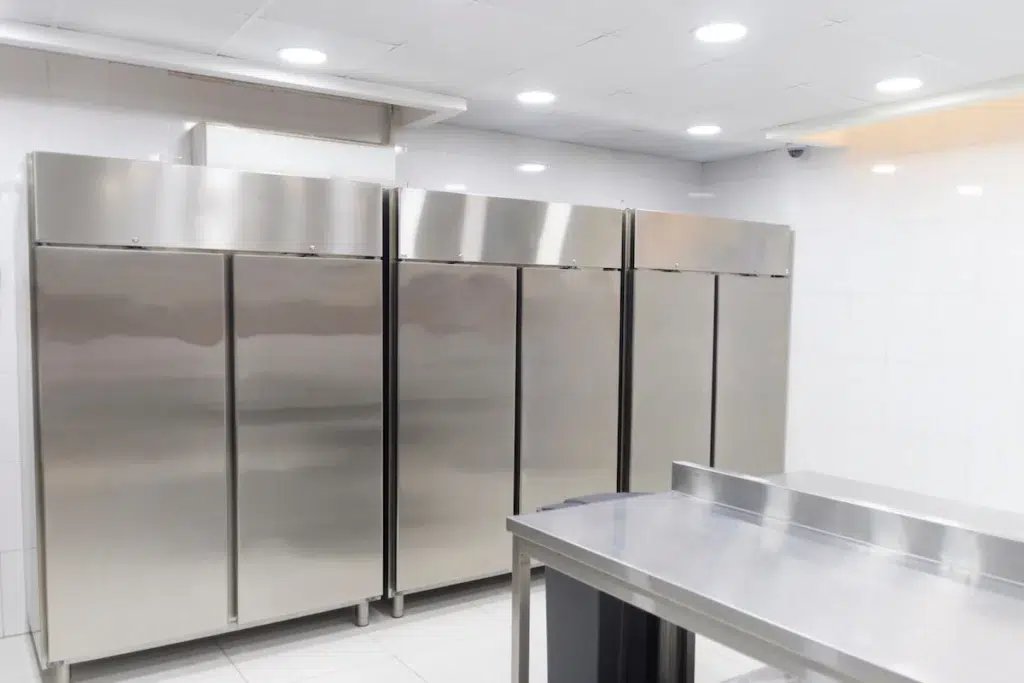
Certain equipment types will no longer be allowed on the market:
| Equipment Type | Prohibited Since/From | GWP Limit |
| Commercial refrigerators & freezers | 2022 | GWP > 150 |
| Stationary refrigeration systems (except chillers) | 2025 | GWP > 2,500 (unless cooling below -50°C) |
| Hermetically1 sealed refrigeration systems | 2025 | GWP > 1502 |
| Split AC systems (< 3 kg refrigerant charge) | 2025 | GWP > 7502 |
In addition, a service ban applies to refrigeration systems using virgin F-gases with GWP > 2,500.
¹ Hermetically sealed systems are those where all components containing refrigerant are welded, soldered, or bolted together and sealed gas-tight.
² Exceptions possible for meeting specific safety standards.
3. Reduction of F-Gas Availability
The annual quota of HFCs (hydrofluorocarbons) is being reduced, possibly leading to rising prices and supply shortages. Starting in 2025, each new tonne of HFCs will be priced at approx. €3 per tonne of CO₂ equivalent, to incentivize climate-friendly alternatives. The use of HFCs—responsible for 90% of F-gas emissions—is to be phased out completely by 2050.
4. New Operator Requirements and Labeling Obligations for Cooling Systems & Air Conditioners 2025
Larger systems using F-gases must be equipped with a leak detection system. In addition, leak tightness checks become mandatory. The release of F-gases is only permitted if technically unavoidable. Anyone working with such systems must provide proof of certification.
What does this mean? Operators must do everything possible to prevent refrigerant loss. A leak detection system automatically identifies and reports leaks. Leak tightness checks ensure that no refrigerant is escaping from cooling, air conditioning, or heat pump systems.
Which Systems Are Affected?

Regular leak checks are required for:
- Stationary refrigeration, air conditioning, and heat pump systems
- Stationary fire protection systems
- Electrical switchgear
- Organic Rankine Cycle (ORC) systems³
- Refrigeration systems in refrigerated trucks, trailers, containers, and trains
- HVAC and heat pumps in vehicles, machinery, trains, aircraft, etc.
³ The Organic Rankine Cycle (ORC) is a variation of the traditional Rankine cycle used in steam power plants. The difference: It uses an organic working fluid (e.g., refrigerant) that evaporates at lower temperatures instead of water.
Exemptions from Leak Checks
Exempted from mandatory leak checks:
- Hermetically sealed systems containing:
- < 2 kg of F-gas (Annex II, Group 1 of the regulation)
- < 10 tonnes CO₂ equivalent (Annex I)
- Hermetically sealed, properly labeled systems in residential buildings with < 3 kg F-gas
- Electrical switchgear that:
- Contains < 6 kg F-gas, or
- Is equipped with leak monitoring, or
- Has a proven leakage rate of < 0.1% per year
Which Refrigerants Are Allowed from 2025?
| Refrigerant | GWP Value | Notes |
| R-744 (CO₂) | 1 | Natural refrigerant, very eco-friendly |
| R-717 (Ammonia) | 0 | Highly efficient, but toxic |
| R-290 (Propane) | 3 | Natural, flammable, for small systems |
| R-600a (Isobutane) | 3 | Natural, flammable, for household use |
| R-32 | 675 | Still allowed, but restrictions coming |
| R-454B | 466 | Alternative to R-410A, less climate impact |
| R-1234yf/R-1234ze | < 10 | HFO refrigerants4, low GWP |
4 Contain hydrofluoroolefins and are less harmful to the environment than older refrigerants.
Air Conditioners 2025 – Conclusion
The revised F-Gas Regulation makes the transition to climate-friendly alternatives unavoidable. Operators should start preparing to avoid rising costs and supply issues.
Avoid Expensive Downtime and Compliance Issues – Rent Eco-Friendly Cooling Technology Now!
If your systems no longer comply with the regulations or there are supply issues for new compliant systems, rental solutions from Mobile Kälte 24 are ideal:
- Immediately available – no long wait times for new units
- Flexible – suitable for short or long-term use
- Cost-effective – no large investment required
- Compliant – all rental units use permitted refrigerants
Q&A Air Conditioners 2025
What is the F-Gas Regulation?
Since 2024, the new F-Gas Regulation (2024/573) has introduced stricter rules for operators of refrigeration and air conditioning systems. The aim is to gradually reduce fluorinated greenhouse gases (F-gases) to minimize harmful emissions.
Main goals of the regulation:
- Reduce F-gas emissions through stricter rules for production, use, and disposal
- Promote climate-friendly alternatives like natural refrigerants (CO₂, ammonia, propane)
- Phase out the most harmful F-gases completely by 2050
Why are F-gases harmful?
F-gases have a high global warming potential—some are up to 23,500 times more potent than CO₂. When released through faulty systems or poor maintenance, they significantly contribute to climate change. Many F-gases also have long atmospheric lifetimes.
Sources (04/01/2025):
www.umweltbundesamt.de
www.schiessl-kaelte.com
www.si-shk.de
www.tophotel.de
www.ihk.de
Disclaimer: This content was created with great care. However, we cannot guarantee its accuracy, completeness, or currency. Our site contains links to external websites. We have no influence on the content of these sites and therefore accept no liability for them.